Correction (2026-10-06): The +61% trend-filter figure below left out trading fees and was measured on the same data used to choose the 50-day setting. Our own out-of-sample check, after fees, found the filter lost less than simply holding (−36% vs −52% median per coin), but it still lost. Lines like "'X' leads on auc" show the best of many coin-flip results, not a real edge. The grid-suitability result was also misread: the score ranks coins backwards, so the coins it rated best lost the most.
The Lab ran 9 experiments across 9 research threads this cycle (2026-08-03 → 2026-08-10) on the idle GPUs — every verdict below is published as the data said it, wins, losses and coin-flips alike. No cherry-picking.
Which crypto coins can a simple ML model actually predict?
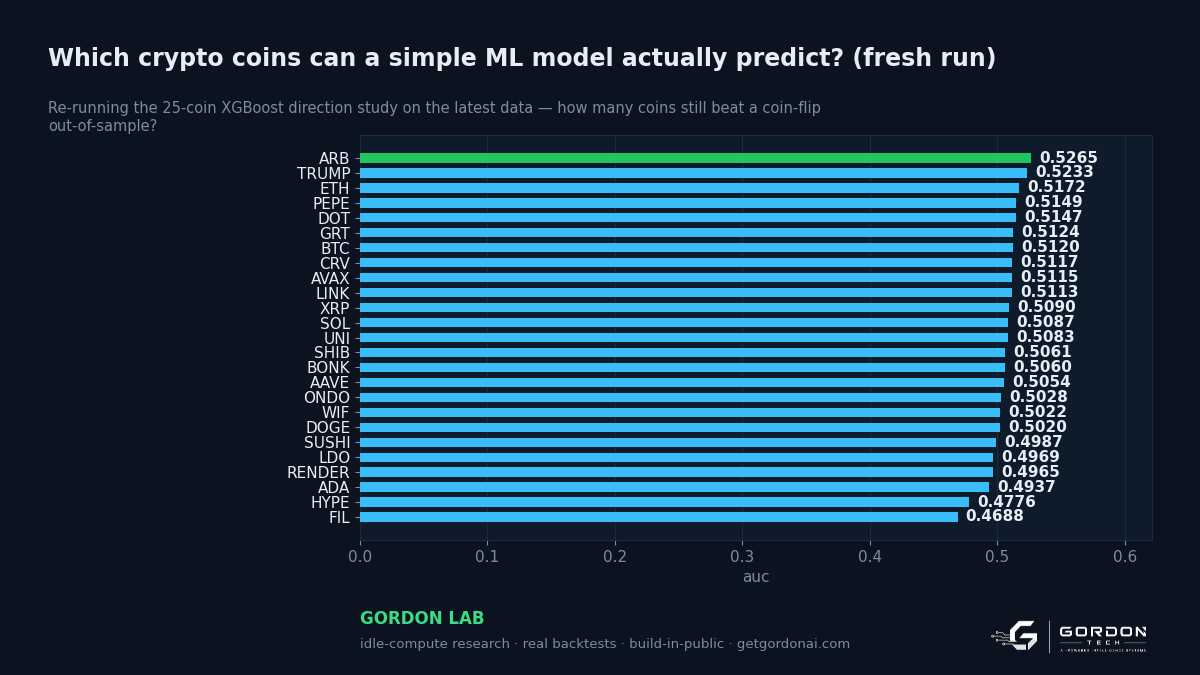
- run of 2026-08-03 — 'ARB' leads on auc: +0.526
We measured a year of 'free yield'. It costs -2.41% a year.
- run of 2026-08-04 — Cash-and-carry across 23 coins: the portfolio version doesn't exist, but BTC/ETH carry is real — and funding maps the crowd.
Feature-family ablation
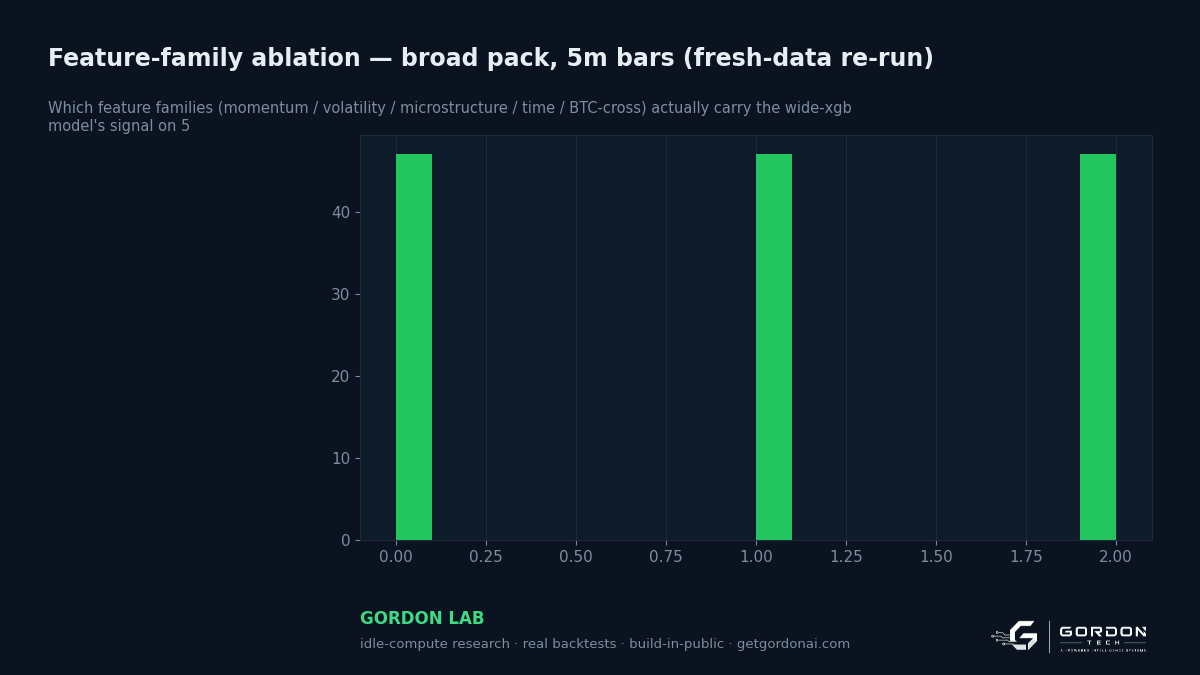
- broad pack, 5m bars (fresh-data re-run) — No single feature family is load-bearing — signal (such as it is) is diffuse
Are calm or wild coins easier to predict?
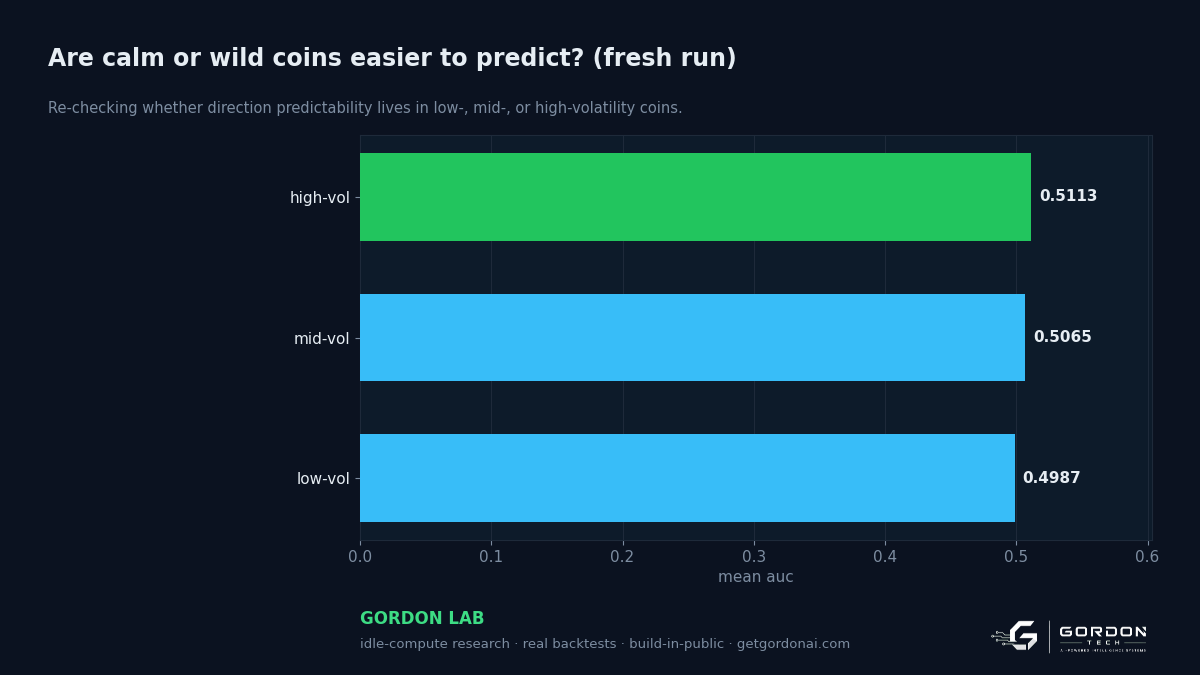
- run of 2026-08-05 — 'high-vol' leads on mean_auc: +0.511
Does crypto direction get more predictable at longer horizons?
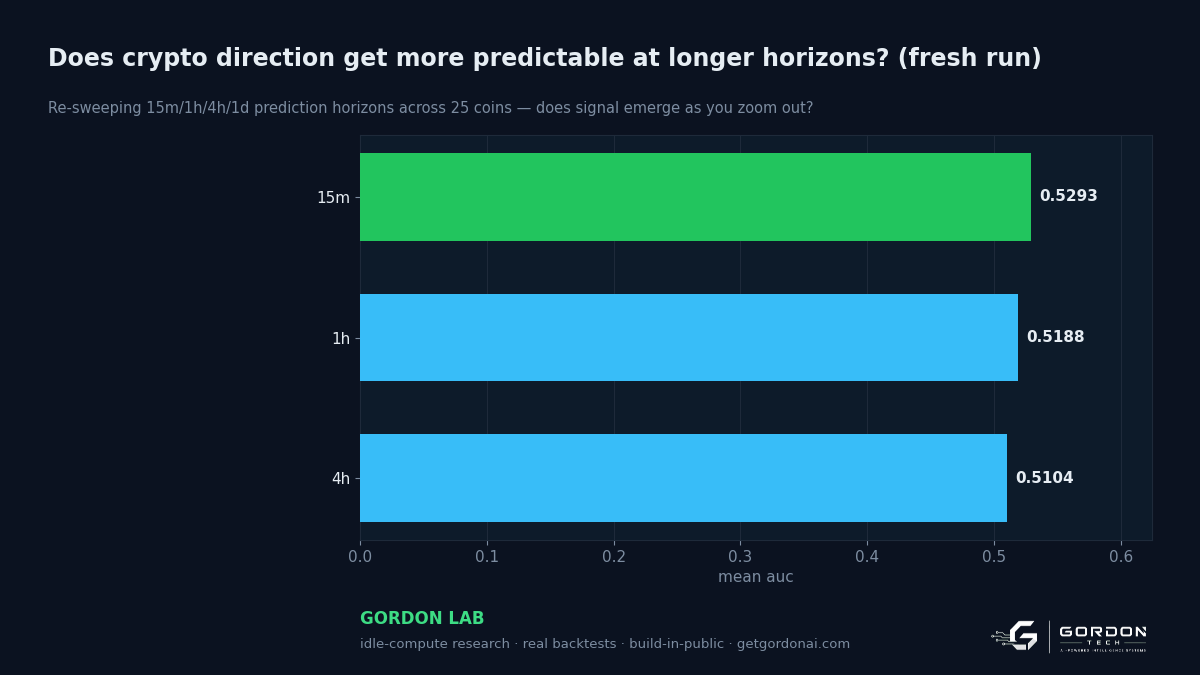
- run of 2026-08-05 — '15m' leads on mean_auc: +0.529
Which coins are actually good for grids?
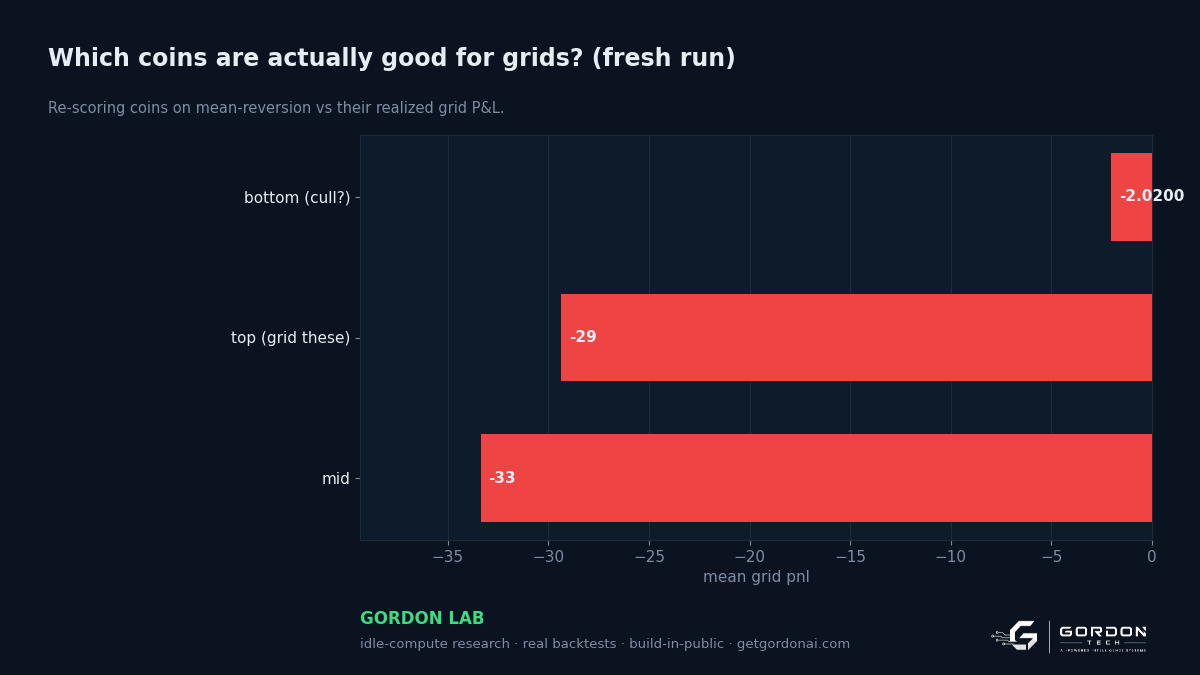
- run of 2026-08-09 — 'bottom (cull?)' leads on mean_grid_pnl: -2.02
Is a simple trend filter better than the grid?
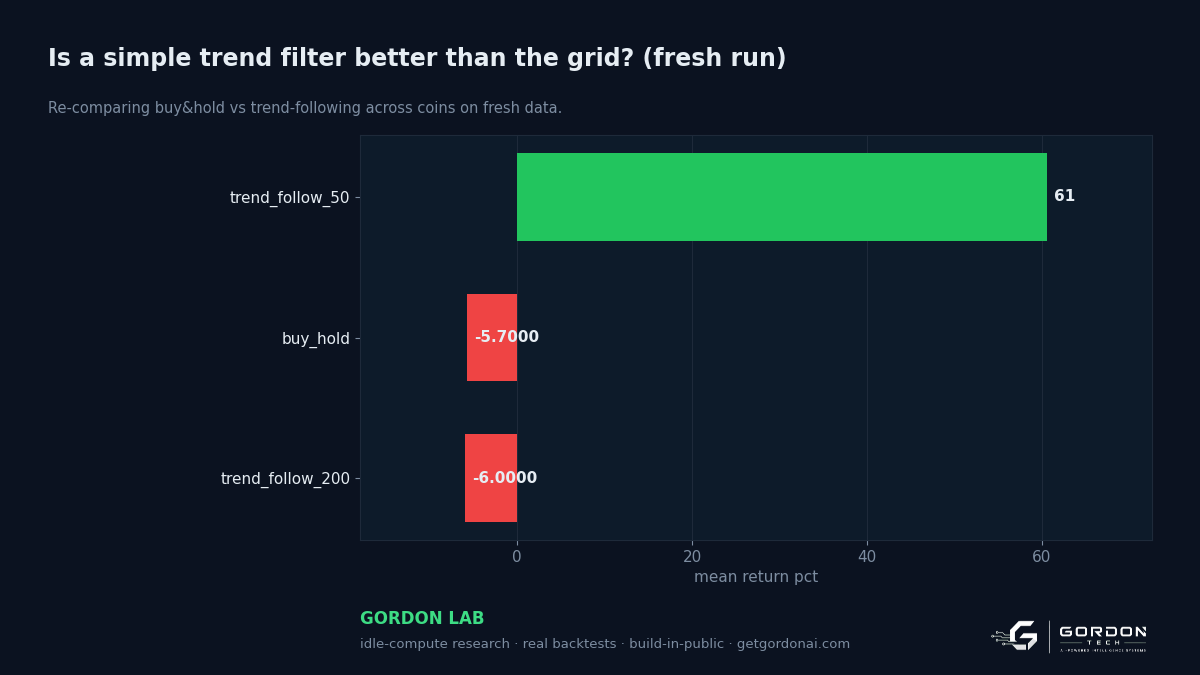
- run of 2026-08-09 — 'trend_follow_50' leads on mean_return_pct: +60.60
Would pausing grids in a BTC downtrend stop the bleed?
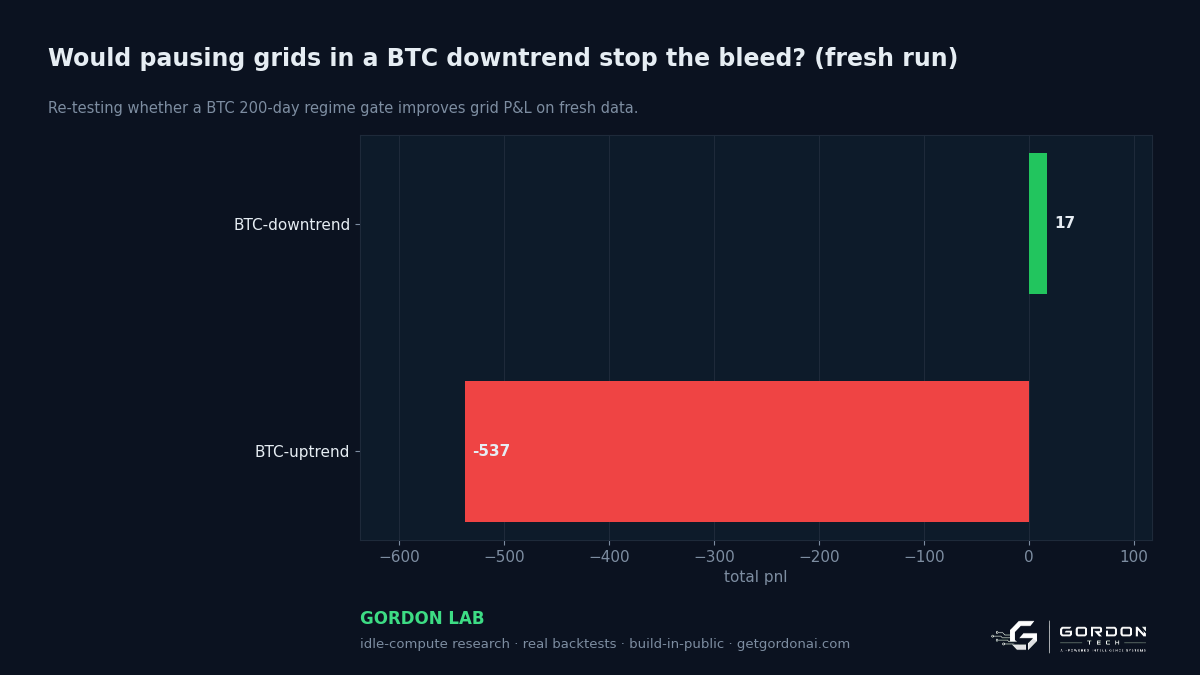
- run of 2026-08-10 — 'BTC-downtrend' leads on total_pnl: +17.38
Confidence-gated trading sim
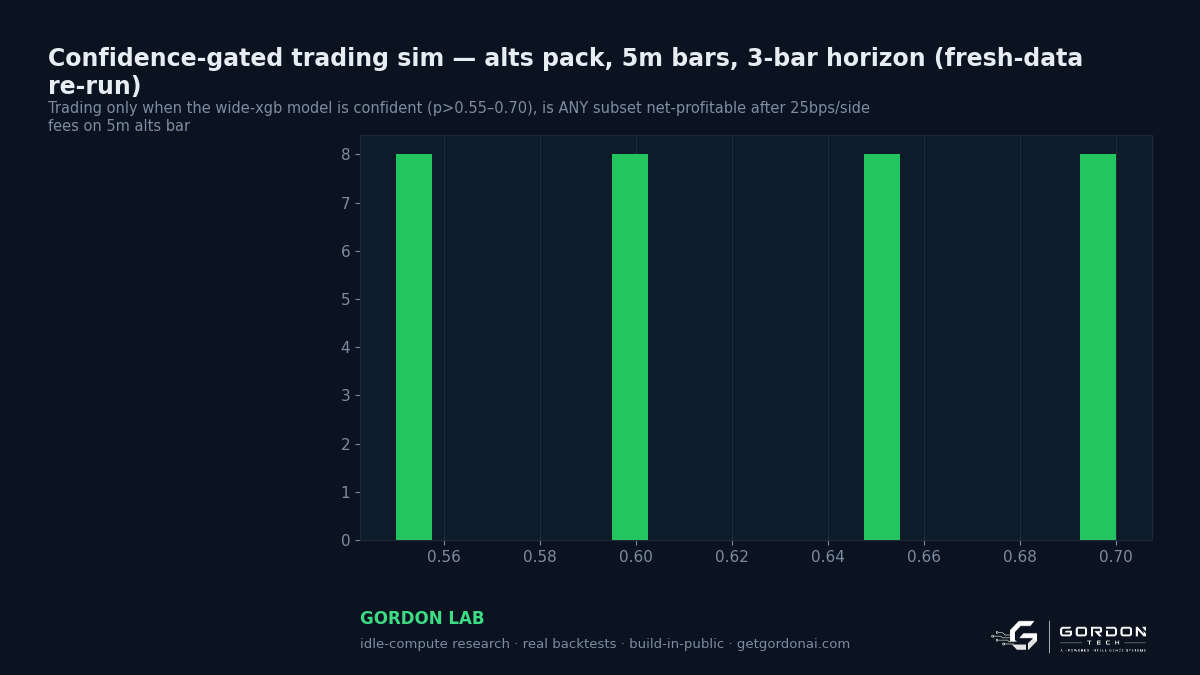
- alts pack, 5m bars, 3-bar horizon (fresh-data re-run) — NO tradeable subset after 25bps/side fees — best cell (short @ p>0.65) still nets 237.5 bps/trade
Auto-published weekly by Gordon Lab. Each entry is a real backtest or model run on real market data; methods and full result tables live in the lab archive. This is research, not financial advice.